How to Remove Hard Water Stains from Glass and Faucets (For Good)
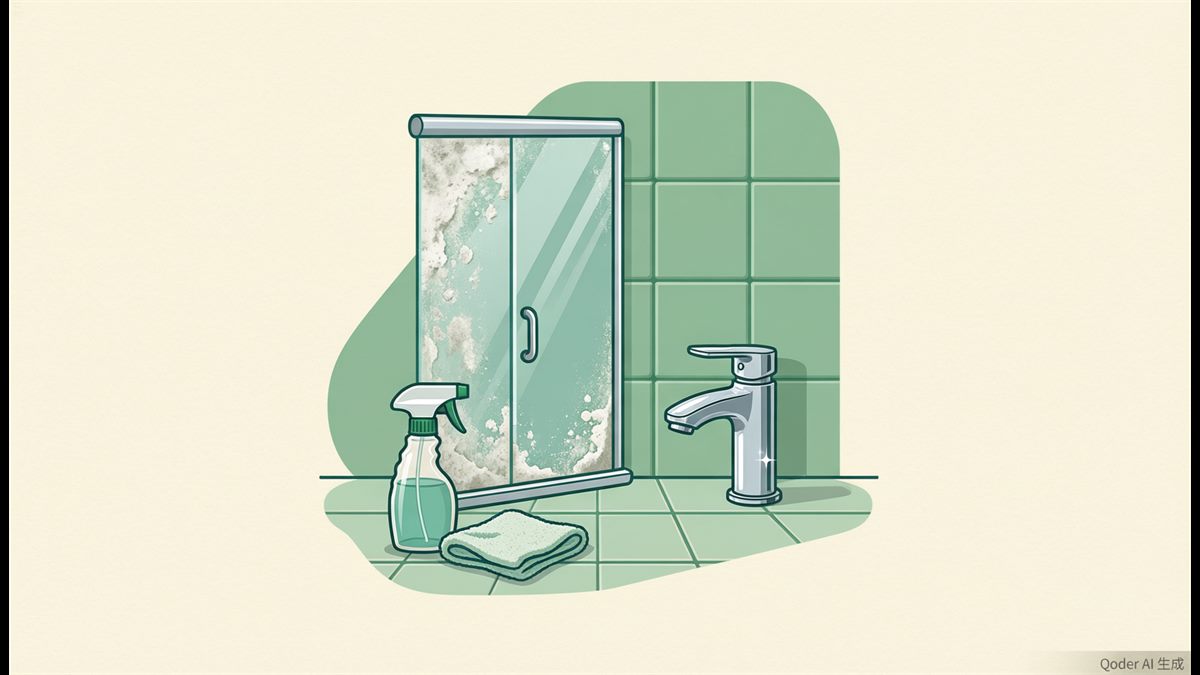
Those chalky white rings are calcium and magnesium left behind as water evaporates. Acid dissolves them; the trick is dwell time and protecting surfaces from the wrong acid.
Read the surface first
Chrome and glass tolerate mild acid. Natural stone (marble, travertine), unsealed grout and some aged finishes etch on contact — never put vinegar on stone. Test a hidden spot.
Method 1: white vinegar on fixtures
Soak a cloth in distilled white vinegar, wrap it around a faucet or showerhead, and leave it 30-60 minutes. The mineral film wipes away. For a removable aerator or showerhead, soak the part overnight in a cup of vinegar.
Method 2: vinegar-and-dish-soap on shower glass
Equal parts white vinegar and water in a spray bottle, with a squirt of soap to help it cling. Spray, wait ten minutes, squeegee top to bottom, rinse. The soap cuts the body-oil film the scale clings to.
Method 3: citric acid for stubborn scale
Powdered citric acid is stronger and odorless. Dissolve a couple of tablespoons in warm water, apply as a paste for heavy rings, and keep it off stone and grout for long.
Method 4: a magic eraser, used sparingly
A dampened melamine foam lifts light scale off glass and tile. It is abrasive, so skip it on soft finishes and high-gloss chrome you want to keep bright.
Slow the return
After cleaning, a thin coat of car wax or a commercial rain-repellent on glass makes water bead and run off instead of sitting and drying. A squeegee on the shower door after each use does more than any cleaner.
If the whole house is scaled
A shower-head filter helps at one fixture only. For true hard water across the house, a softener is the structural fix; everything above is maintenance, not treatment.
Related reads
The Weekly 30-Minute Bathroom Clean That Stops Grime Before It Sets
A fixed-order, timer-based bathroom routine that keeps soap scum, mold and limescale from building up — so your deep clean never becomes a Saturday chore.
How to Deep Clean a Kitchen in 90 Minutes (Room-by-Room Order That Works)
A tested 90-minute kitchen deep-clean routine: the top-to-bottom order, the two supplies pros use, and the five spots everyone forgets.
Reducing Household Waste: Realistic Swaps That Actually Stick
The few high-impact changes that cut family waste without adding chores, which popular swaps quietly fail in real households, and how to start without a plastic-free panic.